Qualitative vs. quantitative thermography for building inspections
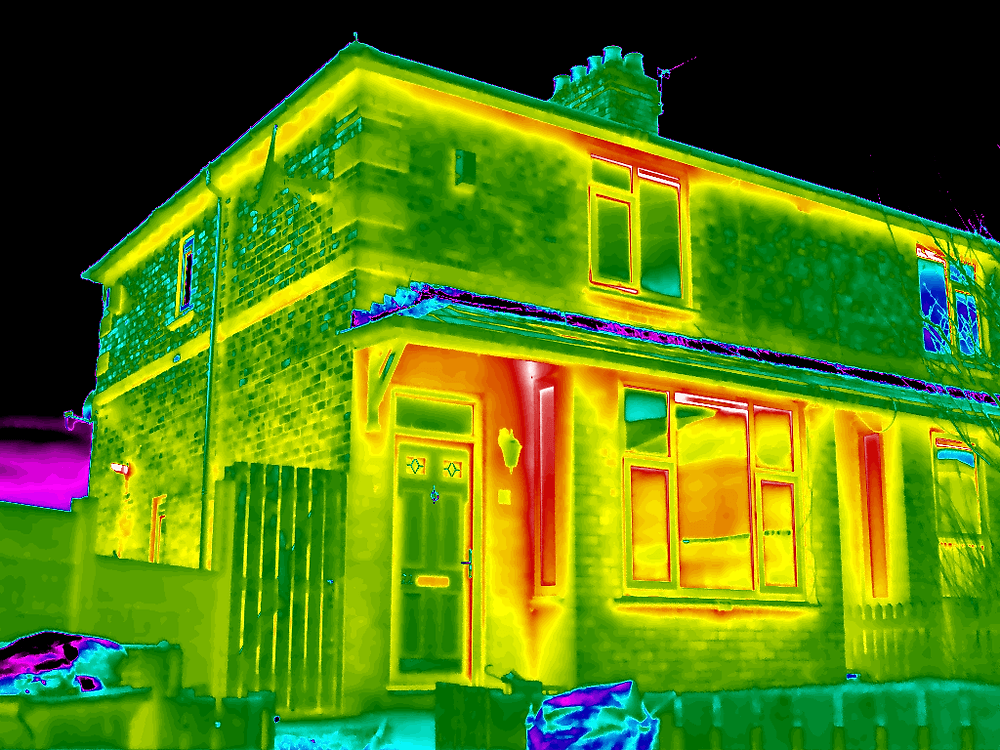
Infrared thermography (IRT) is a widely used technique for assessing buildings, helping to identify issues related to heat loss, insulation and air leakage. However, not all thermal imaging methods are the same. Two distinct approaches — qualitative and quantitative thermography — serve different purposes. Understanding their differences is essential for interpreting thermal data accurately.
Qualitative thermography
Qualitative thermography is a diagnostic tool that relies on the skill and expertise of the operator to interpret thermal images. This approach identifies patterns, temperature differences and anomalies that indicate potential issues.
It is particularly valuable for detecting insulation defects, pinpointing air leakage, and identifying moisture infiltration. Qualitative thermography requires an experienced operator who understands the context, physics and limitations of thermal imaging. A trained thermographer must consider environmental factors such as wind, solar gain and recent weather conditions that may influence surface temperatures.
With the right expertise, qualitative thermography transforms raw images into actionable insights. In inexperienced hands, however, anomalies can be easily misinterpreted — leading to incorrect conclusions.
Quantitative thermography
Quantitative thermography attempts to measure absolute temperatures and compute precise thermal properties, such as U-values. It requires carefully controlled conditions and is typically used for:
- Laboratory testing of building materials
- Scientific research into thermal resistance (R-values) and heat flow
- Certain industrial and medical contexts where exact temperature metrics are critical
To produce trustworthy temperature or heat-flow measurements, quantitative surveys need calibrated cameras with verified accuracy, steady-state conditions indoors and outdoors, accurate knowledge of material properties including emissivity, and additional instruments like heat flux plates to measure actual heat flow.
In everyday, real-world building surveys — particularly external ones — these conditions are rarely met. Temperature fluctuations, wind and solar gain introduce large uncertainties, making truly quantitative results difficult to validate.
Key takeaway
When it comes to practical building surveys, qualitative thermography is typically the go-to method. In skilled hands, it quickly locates problem areas and provides visual evidence that can guide repairs or retrofits.
While quantitative thermography has its place in controlled environments such as labs and specialised research settings, attempting to apply it casually to everyday building surveys often leads to misleading data.
By recognising these differences, building professionals can select the right approach for their needs — whether it's an expert-led qualitative scan to pinpoint problem areas or a carefully controlled quantitative study for precise heat-flow measurements.
References
- Husein, H. A. (2022). Thermal Imaging for Improving Energy Conservation Behaviors: An Infrared Thermography Survey for Residential Buildings. International Transaction Journal of Engineering, Management, & Applied Sciences & Technologies, 13(9).
- Ferreira, A. T. V., Ferreira, P., & Santos, M. M. (2024). A qualitative analysis using thermography for characterization of the built environment.